Showing Up in AI search: 3 Key Takeaways
The top 3 things I learned from generative AI search optimization courses.
by John Constantinides
AI is changing how search works - not just how people search, but what you should do to ensure they find you. SEO (Search Engine Optimization) has now expanded to include more specialized tactics geared towards AI tools, like ChatGPT or Gemini (Google AI). Optimizing your website and online presence for AI tools is often called Generative Engine Optimization (GEO).
I’ve been researching, taking courses and experimenting with how AI tools decide what information to present in response to users’ queries. Here are 3 key things you need to know about how AI-powered search works, and how to improve your chances of showing up in generative (AI) search results.
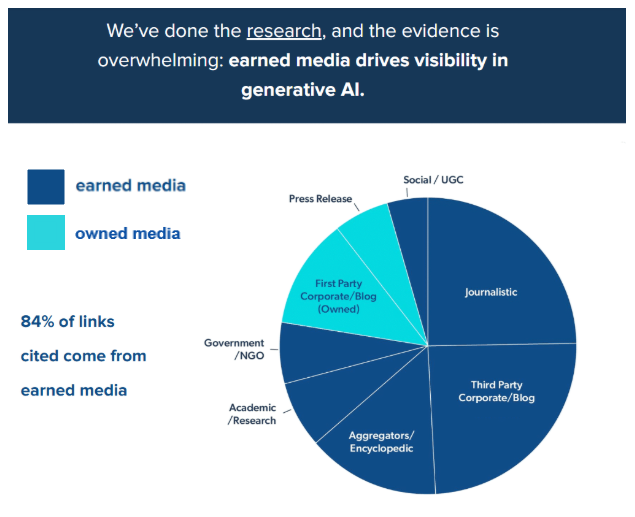
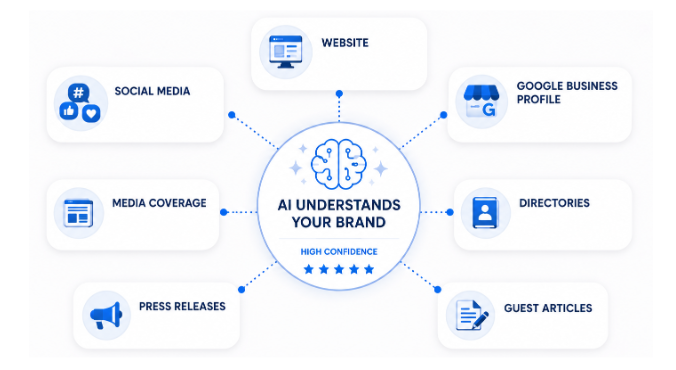
One of the most surprising things I’ve learned is how heavily AI systems rely on information that exists outside your website. When AI tools such as ChatGPT and Gemini evaluate organizations, they often draw from a wide range of external sources, including:
Many of these types of sources are often referred to as earned media - media that you didn’t pay for, where people voluntarily mention you.
In many cases, these external sources appear to carry more weight than your own website (blogs and on-page copy) when AI systems are determining which brands to mention or recommend.
This means you need to think beyond your own digital properties. Visibility increasingly depends on what the broader internet says about your brand.
A second key lesson about AI search is that consistency matters more than ever.
Search engines and AI systems look for patterns. When information about your organization is clear and consistent across multiple sources, confidence increases. When information is fragmented or contradictory, trust can decrease.
This applies not only to business information such as your name, address, services, and contact details, but also to how you describe your organization and products/services. Literally what words you associate with your brand, over and over.
For example, if one page describes your company as a "digital marketing agency," another calls it a "communications consultancy," and a third positions it as a "branding firm," AI systems may have difficulty understanding your core expertise.
This also applies to brand positioning. If you are always presented in the same way across the web (on your site, in press releases, and on earned media) as a “human-focused marketing firm for the public sector,” AI will pick up on that and have an easier time recommending you.
The same principle applies to locations, service descriptions, leadership profiles, and organizational messaging.
AI currently thrives on repeated instances of the same information appearing broadly across the internet to gain “understanding” and build trust towards your brand. It’s important to remember that things are always evolving, but at this time this strategy seems to be working.
SEO is usually about ranking links to your website on Google (the organic “10 blue links" area). With all the attention being given to AI search and platforms other than Google (like ChatGPT), it's easy to assume that traditional SEO no longer matters. Not true!
SEO (Search Engine Optimization) is the practice of helping search engines understand, index, and rank your website. It includes activities such as keyword research, content optimization, technical SEO, internal linking, site speed improvements, and information architecture.
SEO (when done right) remains the foundation of digital visibility. Why?
AI has changed search, but it hasn't replaced the need for clear, user-oriented content and a solid SEO foundation.
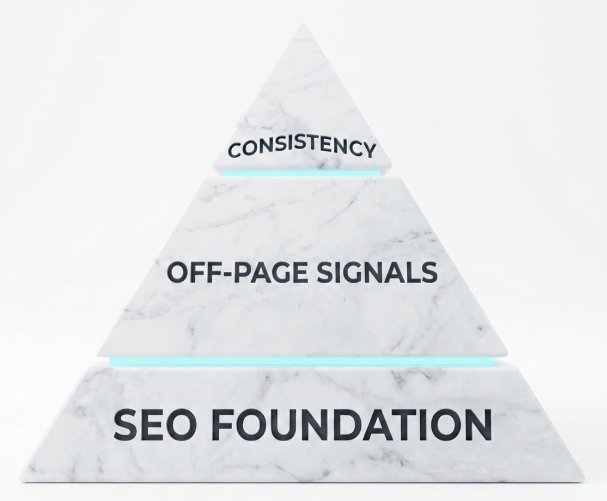
The good news is that despite all the discussion around AI shaking up search, the fundamentals remain surprisingly familiar. Build a strong website. Earn credibility beyond your website. Align with your audience’s needs, and be clear and consistent in how you communicate.
Focusing on these fundamentals, in conjunction with proven SEO and GEO tactics, will put you in a much stronger position to remain visible, not only in traditional Google search results, but also in the AI-powered search experiences that are increasingly shaping how people get information.
Have a difficult communications problem? Reach out, we’re always happy to chat.